Fantastic Plastic
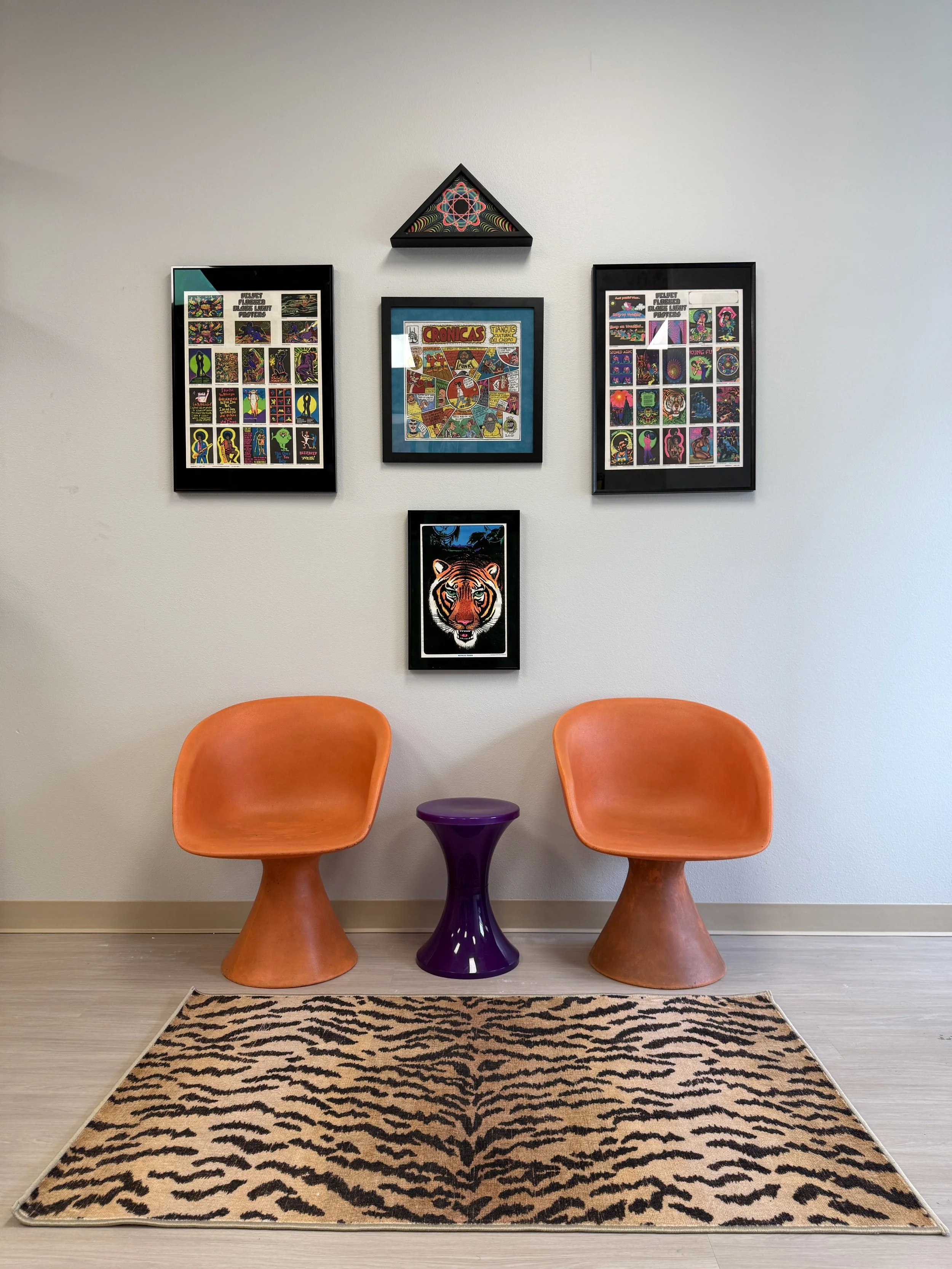
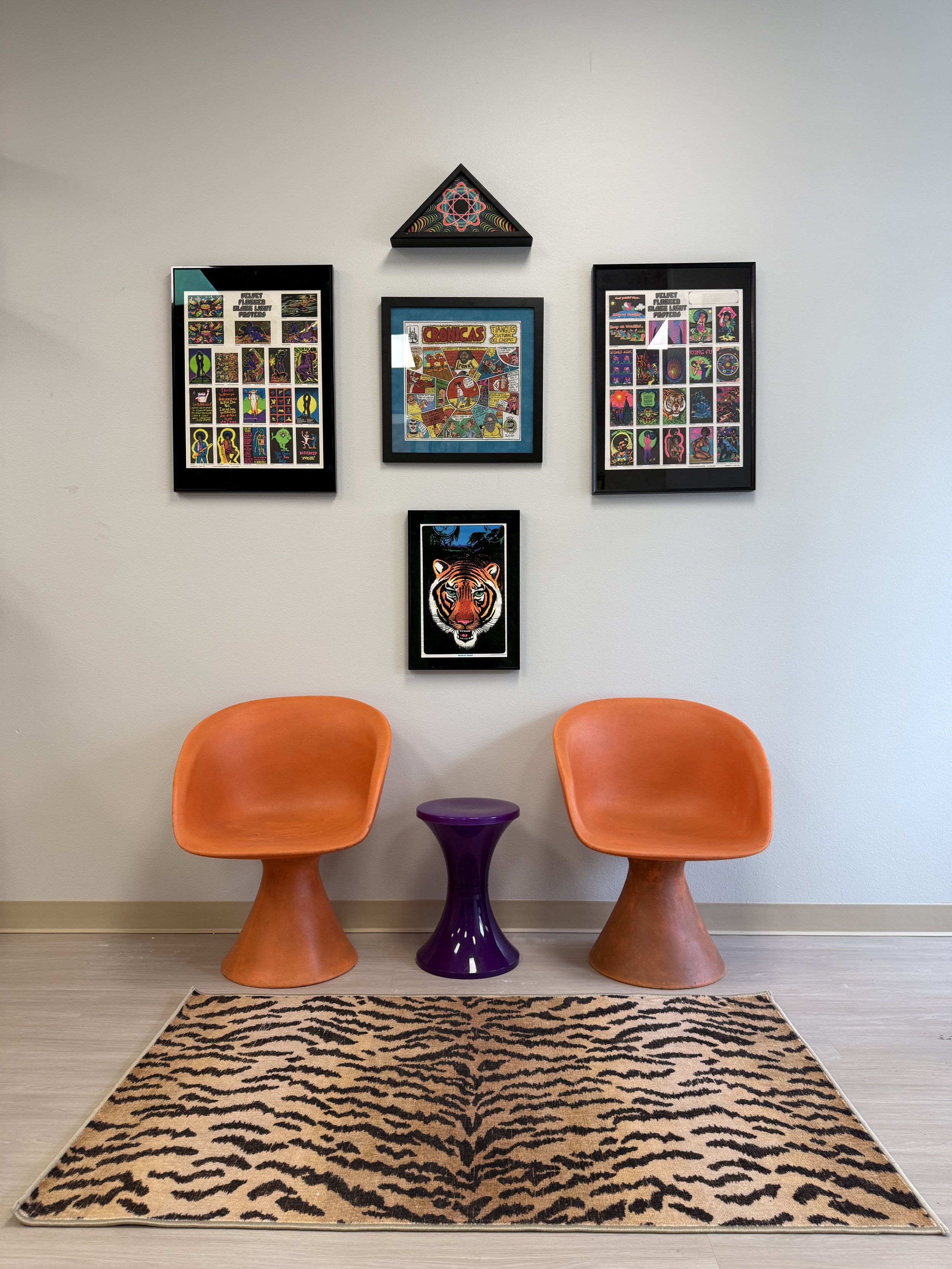
One of the first things that you see when you come into Acme Rag are our orange plastic institutional chairs. They’re big, they’re orange, and they were manufactured for some kind of large institution in 1987. They might just look like fun chairs from Ikea, but they were actually a labor of love for Zack and I.
We were wandering the Eastside Industrial District in Portland, OR and decided to check out a newish vintage shop nearby. When we found the chairs, they were in the corner of a back room of Caravan Co. and covered in a very thick layer of grey latex paint. We were immediately drawn to their midcentury-inspired shape and (apparently) great condition. When we asked about whether they were for sale, we learned that they were, but that they were not assembled (and had lost the hardware somewhere along the way), that their provenance was a mystery, and that they had at least a few layers of latex paint that resembled greyscale covering their original fiery orange visage. It seemed a pity and we figured that we could either remove the paint or repaint them in a more fun color.
As soon as we left the store I started researching how to strip paint from plastic furniture. Our previous stripping projects had resulted in our giving up and just slapping on another layer of paint, but I wanted this to be different. After extensive research (Googling it) we ordered graffiti remover. Since latex paint and plastic are such similar materials, we could not just try to melt the paint, as we had attempted on the vintage wooden doors in our house; we had to actually destroy the bond between the paint and the chairs. Graffiti remover is used for just this, so we ordered a bottle.
The latex paint was in immaculate condition. It was even, without any worn spots or scratches. We started by covering both parts of each chair (since the seats and bases were still separated) with what we thought was a thick layer of graffiti-removing spray. We decided to give them 30 minutes (as directed by the internet) before gently removing the cleaner with microfiber cloths. Some of the first layer of grey paint came off, but it was obvious that we had a lot more work to do.
We covered them with an even thicker layer of graffiti remover and let them sit in the driveway for 2 hours. We had been wanting our very own power washer forever, and it felt like this step would give us a much better chance of making some progress. We ran to the hardware store to get our very own power washer, easily found replacement hardware, and stopped at Sonic for some icy Route 44 goodness.
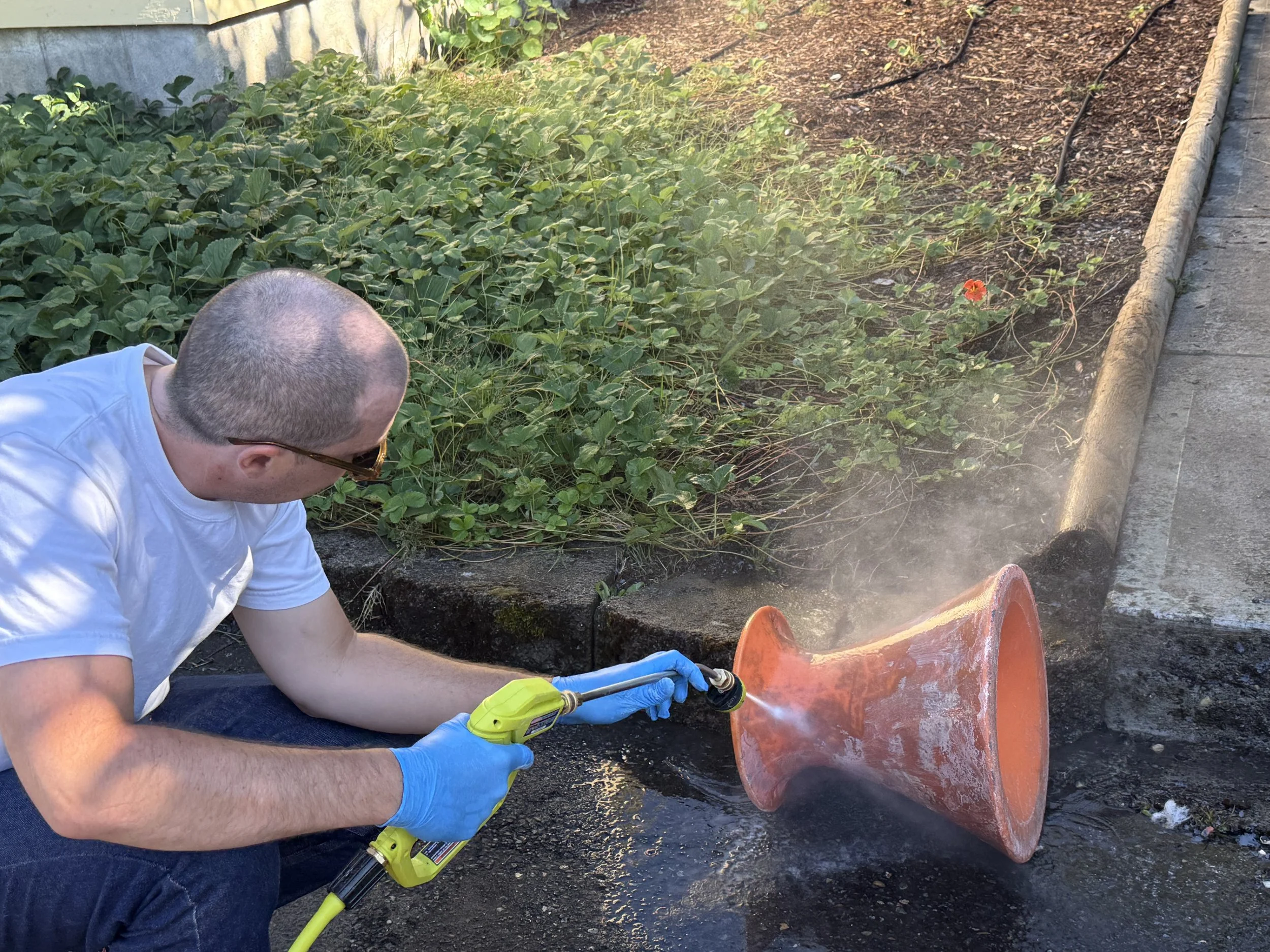
We felt cautiously optimistic when we got home and figured out how to set up the power washer. The results were super impressive and super addictive; peeling latex paint off of plastic with a stream of high-powered water is as much fun as it sounds.
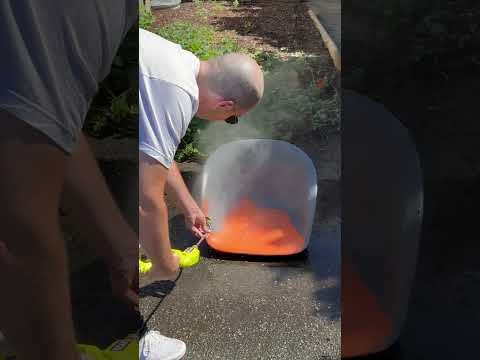
We thought that all of right in the world and planned to finish the chairs the next day. We soon realized, however, that there was even more work to be done.
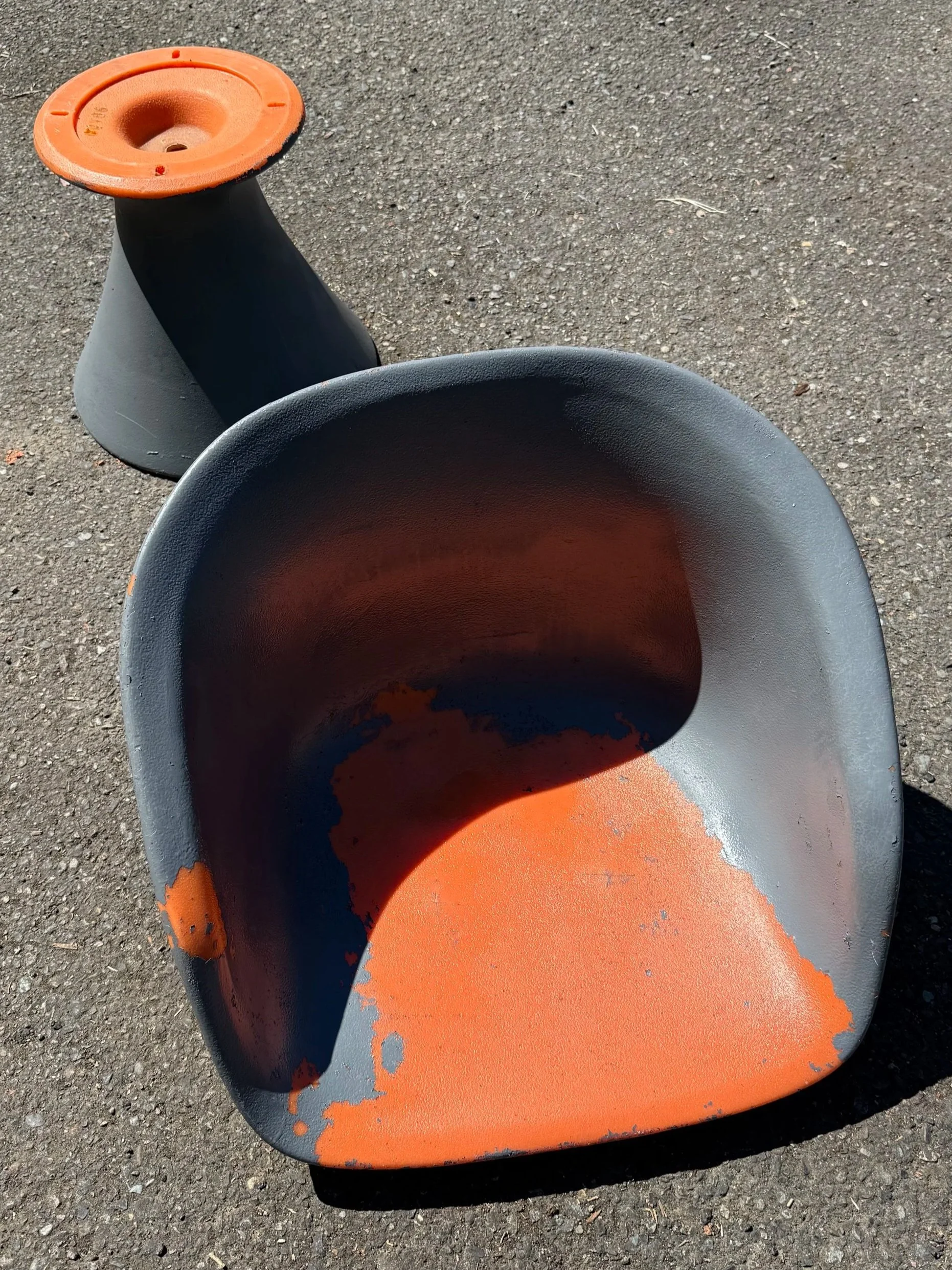
Results after scrubbing and then power washing
We slathered the chairs with even more solvent, left them until the next day, and did another round of power washing. They were getting there, but we were not at all satisfied with the results. As we power washed, we also realized that the only way to get decent results was to use a concentrated, very fine stream of water and to systematically blast every square inch of the chairs. Before throwing in the towel and spray painting them neon orange, we decided to try one more thing.
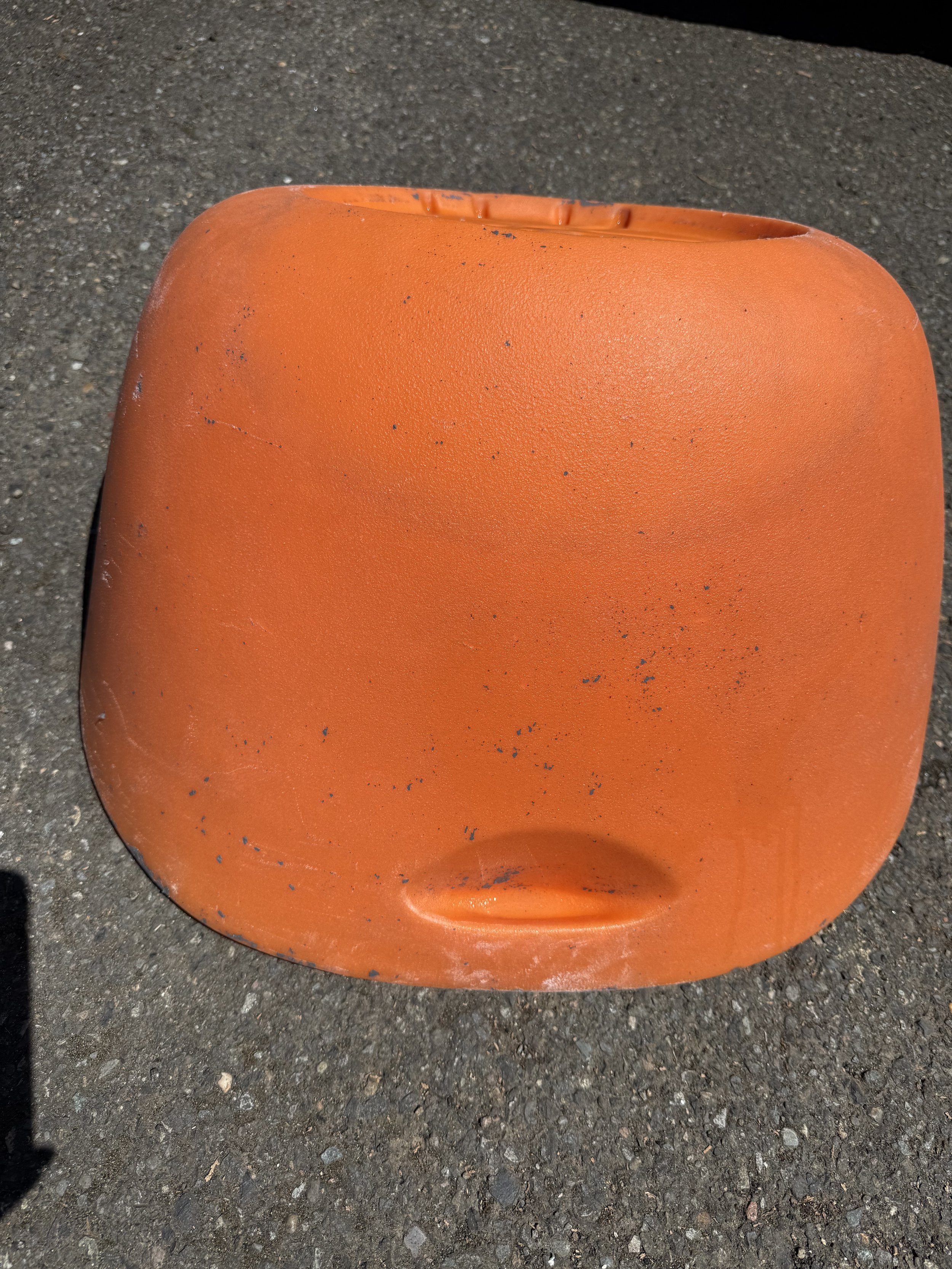
The next morning, we tested CitriStrip on the chairs. For some reason the base parts of the chairs were a lot harder to strip, so we really needed something to get that paint off before shelving the repainintg idea once and for all.
This product claims to melt plastic, but we were desperate and figured that it couldn’t hurt to test it. It 100% worked, so we covered the chairs with the very caustic goop, then wrapped em in plastic wrap for a few hours. The results were amazing!
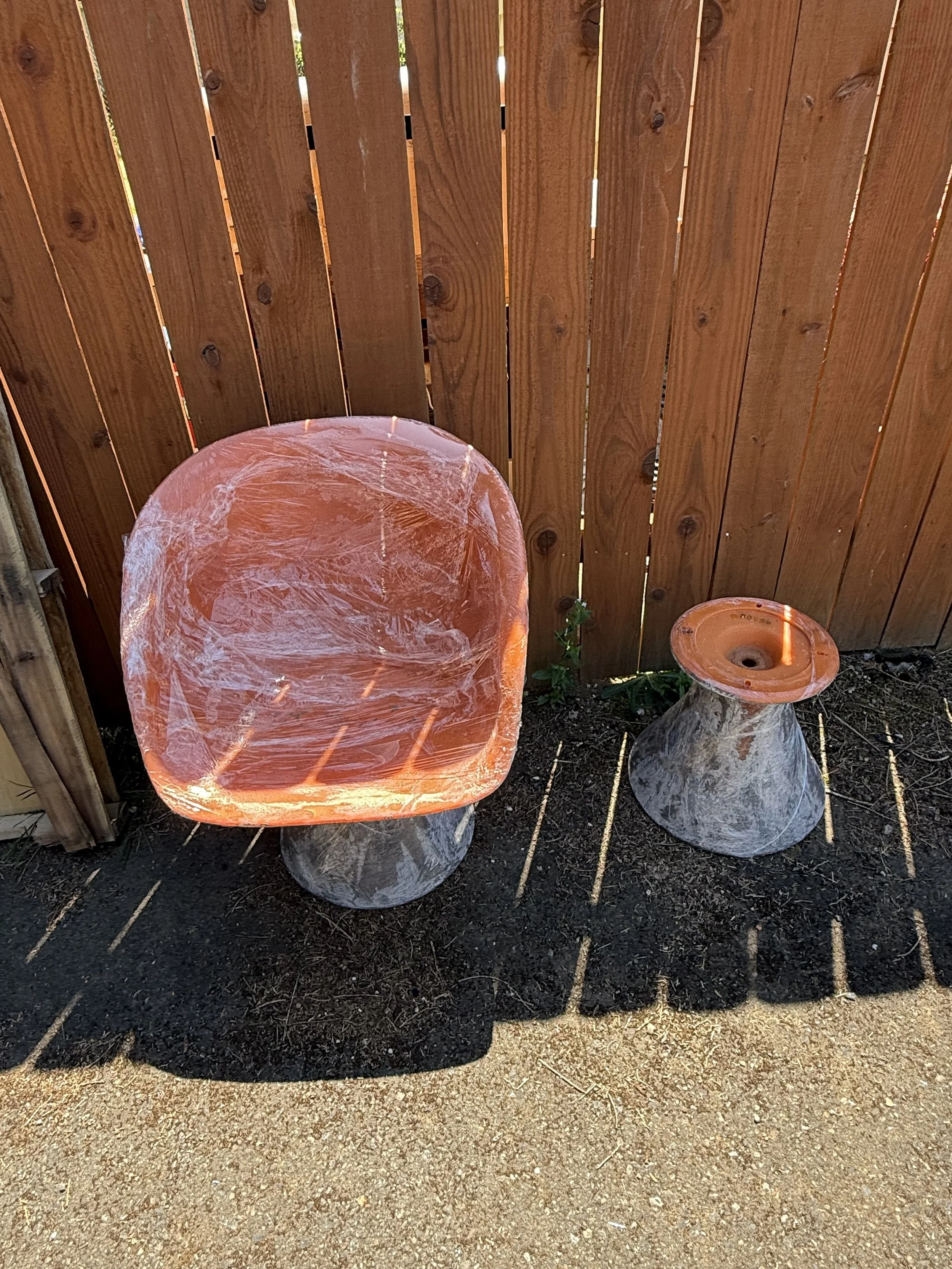
CitriStrip and plastic wrap FTW!
Last came a layer of boiled linseed oil mixed with mineral spirits. This is used by furniture restorers on plastic furniture to brighten the color and protect the chairs from scratches. It can’t be used on outdoor furniture, but no worries there.
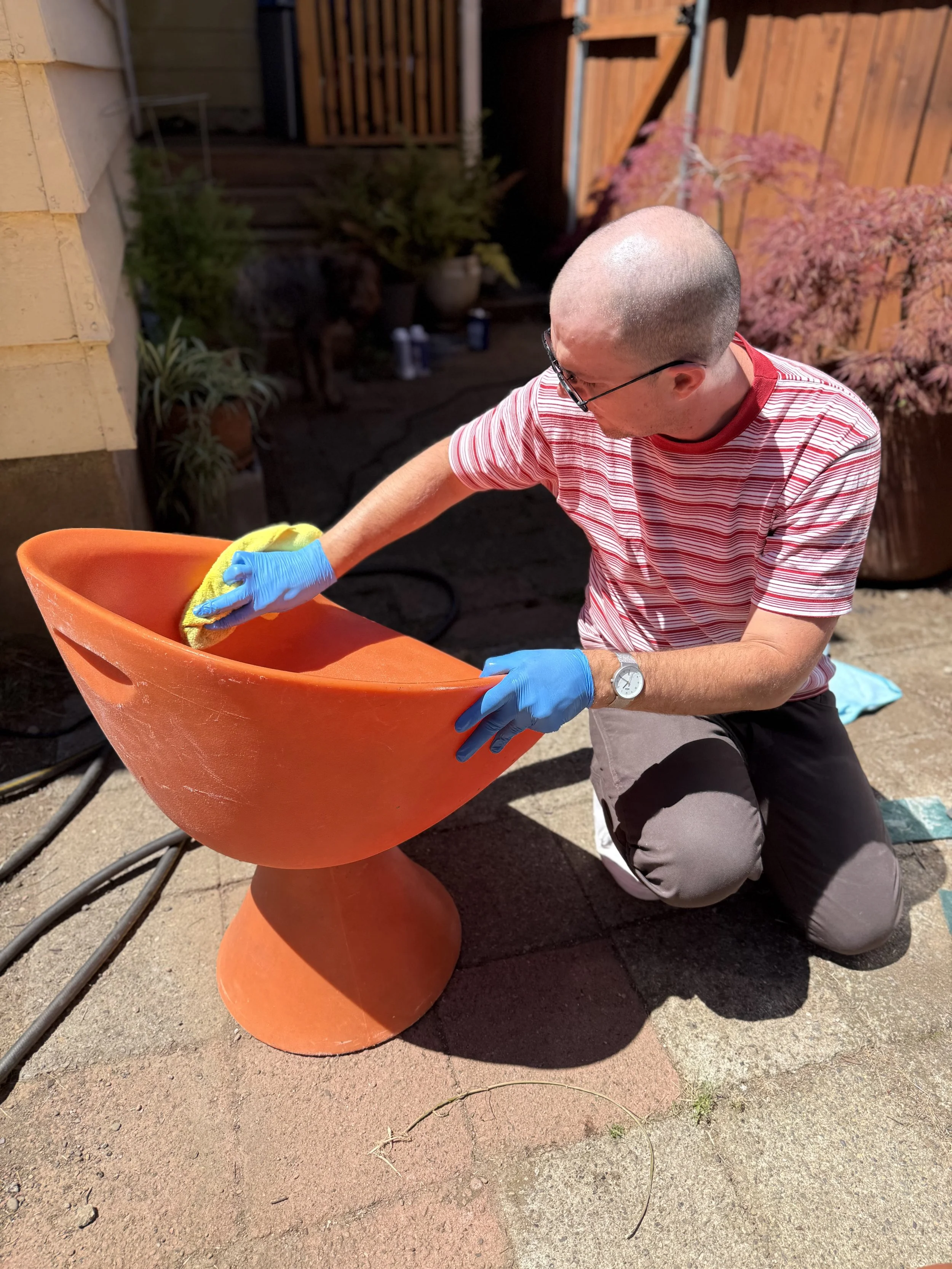
Zack adds the final touches